
Career burnout recovery does not begin with adding more goals or stacking more tasks. Instead, it starts by slowing down and noticing what still feels heavy. Many job seekers feel overwhelmed because they keep carrying obligations that stopped serving them long ago.
Right now, the weight is already familiar. In fact, you can probably name the habits, commitments, or expectations that feel outdated. They linger mostly out of guilt, fear, or habit. Over time, that weight compounds.
As a result, energy drops and clarity fades.
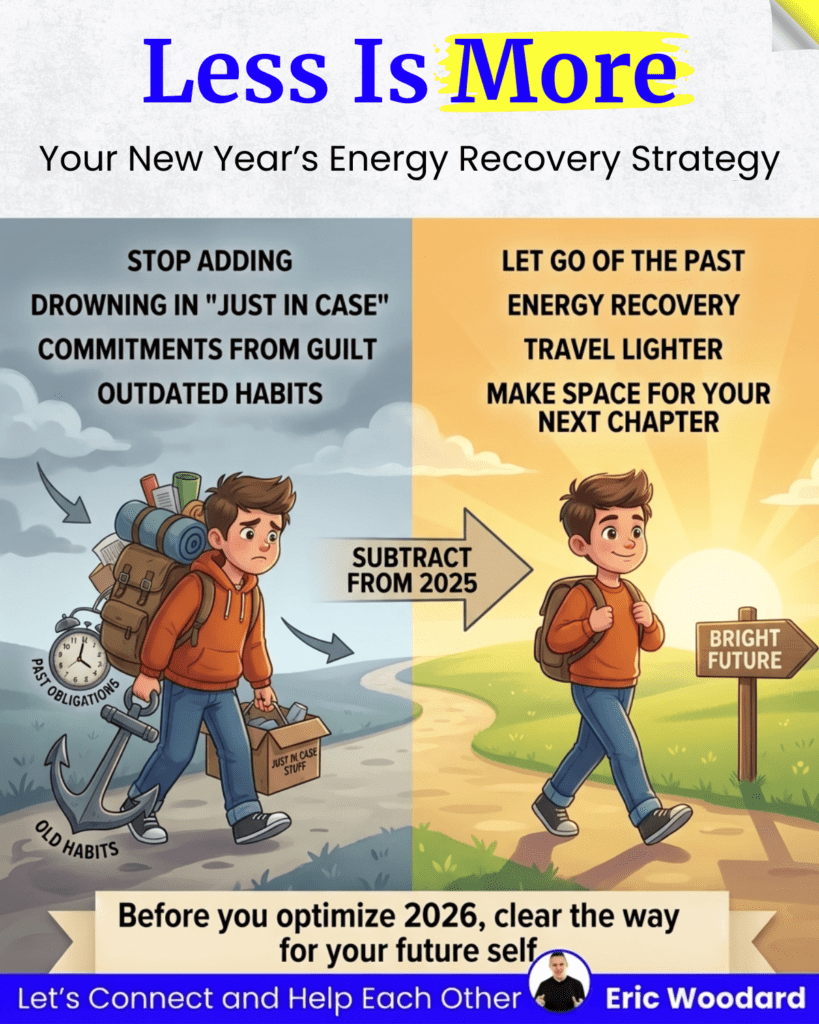
Career Burnout Recovery Is About Energy, Not Effort
Burnout often gets mistaken for a motivation problem. However, exhaustion rarely comes from lack of effort. Instead, it comes from energy leakage. Old routines, outdated priorities, and emotional clutter quietly drain focus every single day.
Meanwhile, many people keep these things “just in case.” Often, fear of missing out shows up as hesitation and second guessing. Over time, regret and uncertainty reinforce the urge to hold on longer than needed. Consequently, FOMO becomes an expensive storage unit, costing time, attention, and emotional bandwidth.
This reframes the entire recovery process. Letting go does not equal loss. Rather, it restores energy. Once energy returns, momentum follows naturally.
Subtraction Comes Before Improvement
Before improving systems or setting new goals, career burnout recovery starts with subtraction. Carrying everything forward slows progress, even for capable and driven people, so removing friction becomes essential for real career burnout recovery.
Think of it this way. You cannot sprint into a new chapter while dragging the full weight of the last one. Clearing space allows better opportunities to surface, and releasing outdated commitments restores focus during career burnout recovery.
As a result, forward movement feels lighter, calmer, and more intentional.
Recovery During Career Transitions
Burnout often surfaces during transition seasons. December energy, in particular, creates clarity. The noise quiets. Performative urgency fades. Honest reflection feels easier.
During this pause, many job seekers recognize how much they have been carrying. Old identities. Unrealistic timelines. Expectations inherited from others. Over time, these layers become exhausting.
This moment invites a simple shift. Ask what no longer fits. Ask what drains more energy than it returns. Even small releases create noticeable relief.

Creating Space for What Comes Next
Career burnout recovery starts with subtraction, since clearing mental and emotional clutter creates space for focus, confidence, and calm decisions. As a result, progress feels steady instead of forced.
When you carry less, clarity returns and direction feels aligned. Energy begins to rebuild, and career burnout recovery takes shape the moment you release what already expired.
Final Thought
Career burnout recovery does not require dramatic change. Instead, it invites calm awareness and small, deliberate choices, since releasing what no longer serves you creates space that effort alone never could.
As you move ahead, notice how progress feels easier when you carry less. Energy returns as outdated expectations loosen their grip, and clarity naturally follows. This path is not about repairing yourself. It is about reclaiming your freedom.

Frequently Asked Questions
What is career burnout recovery?
It is the process of restoring energy, focus, and clarity after long periods of work stress. It often begins by releasing habits and expectations that quietly drain energy.
How do I know if I need career burnout recovery?
Constant fatigue, low focus, or emotional distance from your work can signal burnout. Loss of motivation and decision fatigue are also common signs.
How long does career burnout recovery take?
The timeline looks different for everyone and depends on how long burnout has been present. Small, steady changes often bring noticeable relief over time.
Can career burnout recovery happen during a job search?
Yes, it can happen during a job search when pressure is reduced and expectations are simplified. Creating space helps improve focus and confidence.
What is the first step in career burnout recovery?
The first step is identifying what no longer serves you. Letting go of one draining commitment often creates immediate relief.