
You are not incompetent. More often, you are operating inside a toxic work environment. At first, it feels like normal pressure. Then it turns into exhaustion. Over time, it becomes self doubt, not because the work is hard, rather because the resistance never stops.
In that same environment, effort does not translate into impact. Energy goes in, friction comes out. As a result, even strong performers begin questioning themselves.
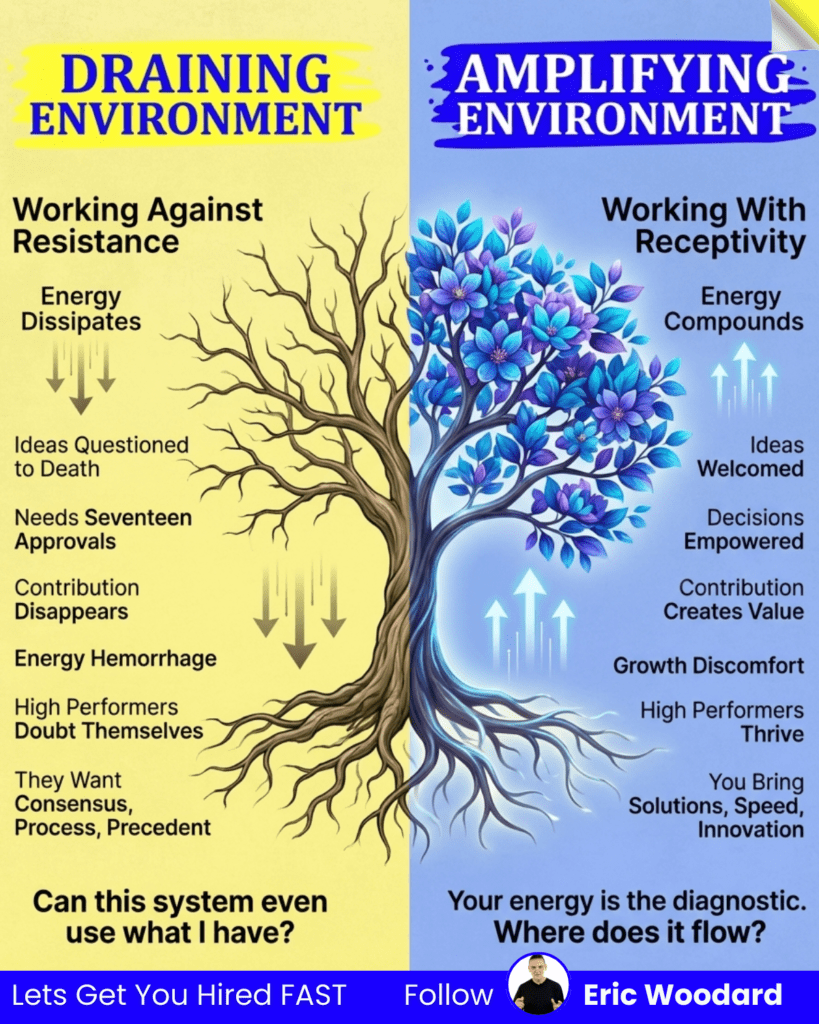
The Real Cost of a Toxic Work Environment
A toxic work environment drains energy quietly. It rarely announces itself. Instead, it shows up in small moments that pile up fast.
Ideas get picked apart.
Decisions wait on endless approvals.
Meanwhile, contributions disappear into meetings with no outcome.
Eventually, momentum stalls. Confidence erodes. As a result, performance drops, not from lack of ability, rather from constant drag. This is not growth discomfort. This is energy loss.
How a Toxic Work Environment Breaks Momentum
High performers thrive on movement. They think in solutions, patterns, and outcomes. However, a toxic work environment rewards hesitation over progress.
You bring speed, while they lean on process.
Clarity comes from you, yet consensus slows everything down.
Innovation shows up, only to be met with precedent.
Over time, this mismatch creates internal conflict. You start wondering if your instincts are wrong. Meanwhile, the system remains unchanged.
The environment does not adapt. You absorb the friction instead.
Toxic Work Environment vs Personal Capability
A toxic work environment often convinces capable people that they are the problem. Over time, this belief grows slowly, especially as progress stalls and results stay muted.
However, capability does not disappear overnight. Skills do not evaporate. Judgment does not suddenly fail.
What changes is receptivity. When an environment cannot use what you bring, output loses value. As a result, confidence drops even when competence stays intact.

Energy Is the Diagnostic Signal
Energy tells the truth faster than titles or feedback.
In a healthy environment, energy compounds. Ideas gain traction. Effort creates momentum. Progress feels visible.
In a toxic work environment, energy dissipates over time. As a result, work feels heavier and wins feel smaller, while progress becomes increasingly invisible.
So notice where your energy goes. Does it multiply, or does it vanish? Does it create value, or does it get trapped in friction?
The pattern reveals more than performance reviews ever will.
How a Toxic Work Environment Creates Artificial Limits
A toxic work environment does not reveal your limits. It manufactures them. Systems that resist change cap growth. Cultures that fear speed punish initiative. Teams that prioritize comfort over outcomes stall talent.
Over time, even confident professionals shrink their reach. Not from lack of ambition, rather from repeated resistance.
This is how strong contributors become quiet. This is how momentum fades.
Reframing the Question
Instead of asking if you are good enough, ask a better question. Can this environment use what I bring?
That shift restores clarity. It moves the focus from self blame to system fit. It also opens space for better decisions.
Some environments amplify energy. Others absorb it.
The difference is not talent.
The difference is receptivity.

Final Thought
A toxic work environment trains people to doubt themselves over time, however awareness breaks that cycle. Instead of questioning your capability, start tracking where your energy flows, since that signal reveals far more than feedback ever will. When energy compounds, growth follows naturally, and when it dissipates, the environment is sending a clear message. Listen carefully.
FAQs
1. What is a toxic work environment?
It is a workplace where systems and culture drain energy instead of supporting progress. Over time, frustration replaces momentum.
2. How can a toxic work environment affect high performers?
Strong contributors often feel slowed down, ignored, or second guessed. Confidence drops even though ability stays intact.
3. What are common signs of a toxic work environment?
Ideas stall, decisions drag, and work gets trapped in meetings. Effort increases while outcomes stay flat.
4. How do you know if the issue is the environment, not you?
Watch where your energy goes. When effort never turns into progress, the system is signaling a mismatch