That heavy feeling after you walk out of an interview is familiar to many job seekers. Post Interview Anxiety often arrives quietly, then settles in fast. At first, it feels like fatigue, yet it quickly turns into something deeper that lingers.
For many people, it feels confusing and personal. However, this reaction is not imagined or exaggerated. It is a natural response to intense mental and emotional output during interviews.
What This Experience Really Is
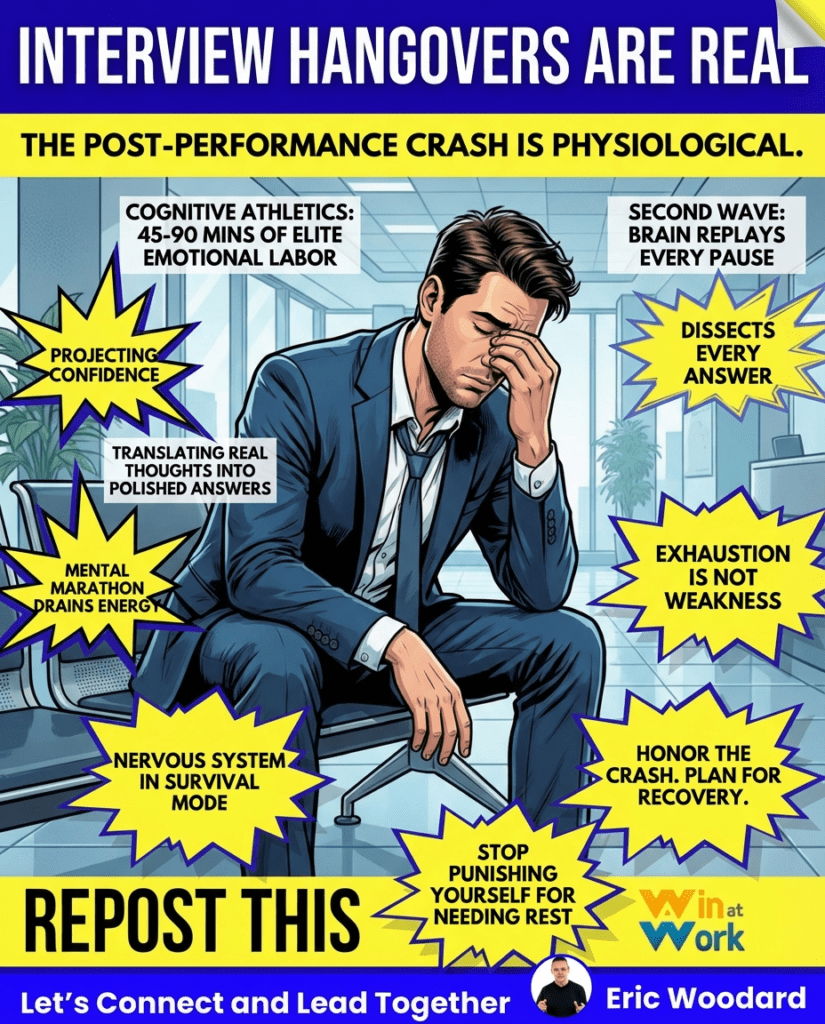
Post Interview Anxiety is not a confidence issue or a mindset failure. Instead, it comes from sustained emotional labor during high pressure conversations. Your brain and nervous system operate at peak levels for an extended period of time.
During an interview, you are constantly adjusting, filtering, and performing. At the same time, your body remains alert and reactive. As a result, the exhaustion becomes unavoidable once the interaction ends.
The Hidden Work Happening During Interviews
For 45 to 90 minutes, you manage first impressions while monitoring tone, posture, and facial expressions. Meanwhile, your mind translates honest thoughts into polished answers that align with expectations. At the same time, you read subtle cues while suppressing stress signals.
This level of effort demands focus, restraint, and awareness. Therefore, Post Interview Anxiety reflects cognitive strain rather than emotional weakness. What feels like overthinking later is often delayed processing.
What Happens Inside After the Conversation Ends
Once the interview ends, external pressure disappears. Internally, your nervous system often remains activated and alert. Because of this, Post Interview Anxiety can intensify after the conversation ends.
Your brain continues scanning for threats, errors, and missed opportunities. As a result, it replays moments repeatedly in search of certainty. This response mirrors survival based performance patterns tied to post interview stress.
The Research Behind Emotional Exhaustion
Research by Hülsheger and Schewe shows that emotional labor leads directly to emotional exhaustion. This confirms that Post Interview Anxiety has a physiological foundation rather than a psychological flaw. Your system simply needs time to downshift.
The body cannot easily distinguish between professional performance and physical survival. Both experiences demand energy, vigilance, and control. Therefore, the crash that follows an interview is biologically expected.
The Second Wave of Post Interview Anxiety
After the initial exhaustion fades, a second wave often appears. This phase includes mental replay, self evaluation, and rumination. Even though nothing new is happening externally, your mind stays active.
During this phase, Post Interview Anxiety thrives in the quiet. Without interruption, thoughts gain momentum and intensity. As a result, many people mistake recovery for failure.
Unrealistic Recovery Expectations After Interviews
Professional performers receive structured recovery time after high effort events. In contrast, job seekers often expect immediate emotional stability. This gap creates unnecessary pressure following interviews.
Post Interview Anxiety becomes more frustrating when recovery feels slow. However, the nervous system needs intentional closure to reset. Ignoring this need extends fatigue.
Fighting Post Interview Anxiety Makes It Stronger
Trying to eliminate Post Interview Anxiety without a clear strategy increases internal tension. When the feeling is judged, the nervous system stays on alert. As a result, recovery slows instead of speeding up.
Acceptance signals safety to the body. Planning for rest signals completion. Together, these responses help the system disengage.
Supporting Recovery From Post Interview Anxiety
Recovery works best when planned ahead of time. Scheduling low demand activities after interviews reduces cognitive load. Physical movement also helps release stored stress connected to Post Interview Anxiety.
Limiting immediate analysis creates space for regulation. Over time, these patterns teach your body that the performance phase has ended. As a result, the intensity fades faster.
Post Interview Anxiety Is Not a Sign of Failure
Feeling drained after an interview does not reflect weakness or poor performance. It is often appears after strong engagement and high effort. In many cases, it signals that you cared.
The real challenge is not the anxiety itself. The challenge is believing something is wrong with you. In truth, this is a normal recovery response.

Final Thought
Post Interview Anxiety is not an obstacle to overcome. It is a signal to slow down and restore energy. Honoring that signal supports long term resilience. When you plan for recovery, the experience loses its power. When you stop judging the crash, your system resets faster. And that shift changes everything.
FAQs
How long does this feeling usually last? It is the mental and physical exhaustion that shows up once the interview ends. Post Interview Anxiety comes from sustained emotional labor and high cognitive effort, not from weakness or lack of skill.
How long does this feeling usually last? The experience often lasts a few hours to a couple of days. The length depends on interview intensity and how much recovery support your nervous system receives.
Is this reaction common among job seekers? Yes, this reaction is very common. Post Interview Anxiety reflects performance under pressure and high engagement, not personal failure.
How can I reduce the intensity afterward? Planning rest, limiting mental replay, and allowing physical movement help the nervous system settle. These actions reduce how strongly Post Interview Anxiety lingers after interviews.