
Most job candidates don’t get rejected they get forgotten. In today’s fast-paced world, recruiters and hiring managers juggle deadlines, interviews, and endless emails. Unfortunately, your follow-up might get lost in the chaos. To stand out and land more interviews, you need to stay memorable. This blog will guide you through six proven job search follow-up strategies that will help you turn silence into opportunity.
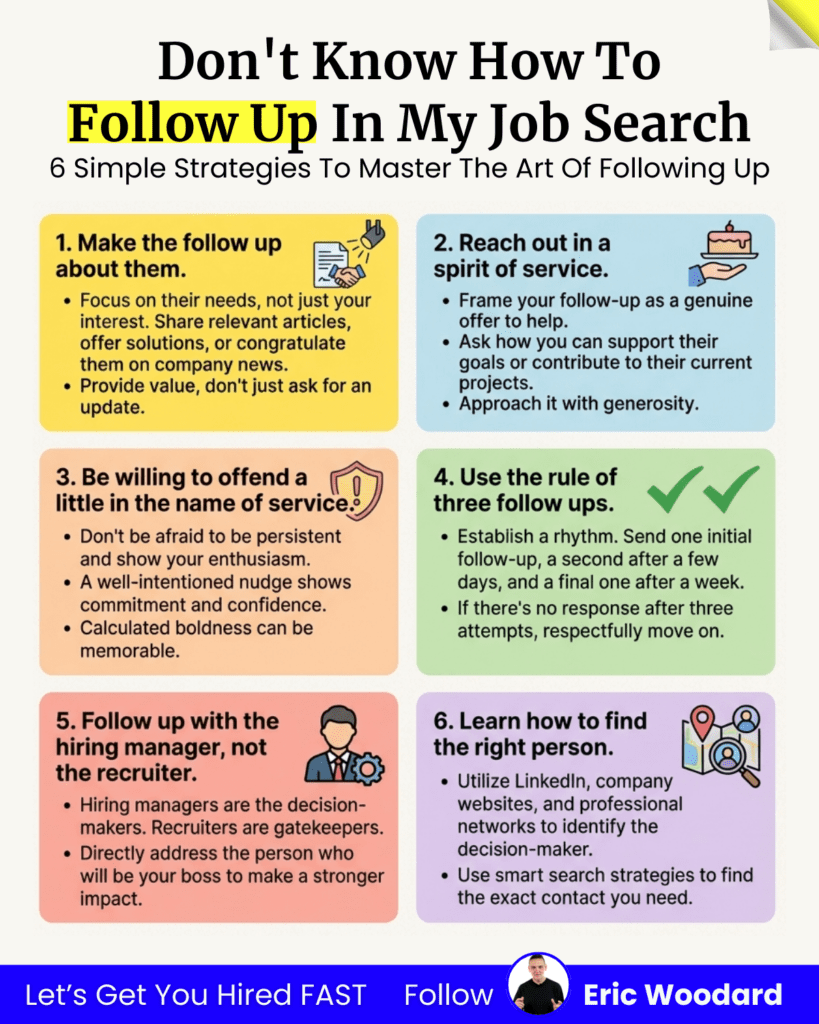
1️⃣ Make Your Job Search Follow-Up About Them, Not You
When following up after an interview or application, it’s crucial to shift the focus from your needs to their goals and priorities. Hiring managers are dealing with challenges like tight deadlines, budget constraints, and team dynamics. So, demonstrate that you understand the challenges they face and how your skills can help them solve these problems.
2️⃣ Lead with Service in Your Follow-Up Messages
When sending a job search follow-up, add value first before asking for anything. Leading with service shows that you’re proactive and focused on offering solutions rather than just waiting for a response. You can offer helpful insights or share resources related to the industry or role that might be useful to the hiring manager.
For example, instead of a standard “Just checking in,” consider offering a thoughtful article or a relevant case study you found that could be beneficial to the team. This positions you as a valuable resource, not just a candidate seeking a job.
If you’re feeling overwhelmed during your job search, here are 6 Tips for Maintaining Balance During the Job Search to help you stay grounded and focused.
3️⃣ Be Willing to Nudge But Be Thoughtful
A gentle nudge can go a long way. If you haven’t heard back after your initial follow-up, don’t be afraid to send a second message. However, be mindful of your approach. A thoughtful push isn’t annoying it’s helpful.
4️⃣ Use the Rule of Three in Your Follow-Up
The “Rule of Three” is simple: one email can get lost, two can get skimmed, but three will get noticed. By spacing out your job search follow-up messages over time, you increase the likelihood of staying on the hiring manager’s radar.
Send your first follow-up message 3-5 days after your interview, the second after about a week, and the third around two weeks later if you haven’t heard back. This helps you stay top of mind while giving the hiring manager some breathing room.
For more on how to manage follow-ups effectively, check out How to Manage Follow Up the Smart Way (and Actually Get a Response) for actionable tips on crafting the perfect follow-up strategy.
5️⃣ Talk to Hiring Managers Directly
Your follow-up isn’t limited to the HR department. While the recruiter is important, the hiring manager feels the pain of the open role and is more likely to move you forward in the process.
In your job search follow-up, take the initiative to reach out directly to the hiring manager (if you haven’t already). In your message, express your excitement for the role and highlight how your skills match their specific needs. Demonstrating that you’ve researched the team’s dynamics can make a significant impact.
Sometimes, the key to a successful job search follow-up is knowing who to contact. Hiring managers often stay busy, and your follow-up message might not reach the right person. If you’re unsure whom to reach out to, use LinkedIn or the company’s website to find the correct contact.
6️⃣ Learn How to Find the Right Person to Follow Up With
Once you know who to send your follow-up to, tailor your message to show you’ve researched their role and team. A personalized approach will set you apart from other candidates who simply send generic emails, making your job search follow-up strategies more effective.
Bonus Tips for Effective Job Search Follow-Up
- Be Consistent, Not Overbearing: It’s important to be persistent, but don’t overwhelm the hiring manager. A consistent but polite follow-up will leave a better impression than sending multiple messages in one day.
- Use a Professional Tone: While it’s essential to be friendly and personable, always keep your tone professional and respectful. Avoid using emojis or overly casual language in your follow-up messages.
- Timing Is Everything: Send your job search follow-up during business hours, and avoid weekends or holidays when the person you’re emailing may be out of the office. Timing your follow-up appropriately can show that you’re considerate of their schedule.
Final Thoughts on Job Search Follow-Up
Mastering job search follow-up strategies can make all the difference in getting noticed and landing an interview. By shifting your focus to their needs, offering value, being strategic with timing, and learning to communicate effectively with the right people, you’ll increase your chances of success.
If you’re feeling stressed about follow-up or unsure of the best approach, join our free live “Get Hired FAST” workshop! I’ll walk you through the exact process and teach job seekers to turn radio silence into interviews. 🚀
👇 Register here for the free workshop
FAQs about Job Search Follow-Up
Q: How long do I wait before following up?
A: A good rule of thumb is to wait 3-5 days after your interview for your first follow-up. If you don’t hear back, send a second follow-up a week later and a third around two weeks.
Q: What do I say in my follow-up email?
A: Keep it brief and polite. Express your continued interest, mention something specific from the interview, and show that you understand their needs.
Q: Do I follow up if I haven’t received a response?
A: Yes! Following up shows you’re still interested and engaged. Be polite and respectful in your message.
Q: How many follow-ups are too many?
A: Three follow-ups spaced out over time is ideal. Any more than that might come across as overbearing.
Q: Do I follow up after a rejection?
A: It’s always worth sending a polite thank-you email after a rejection. You never know when another opportunity might arise with the same company.