

Job searching can feel overwhelming at times, especially when it comes to networking. If networking feels confusing, awkward, or like a game everyone else secretly learned in school 🎓, you’re not alone. But here’s the truth: networking doesn’t have to be complicated, and it doesn’t require you to be a master at small talk or schmoozing.
I’ve coached thousands of job seekers through this part of the search, and one thing I know for sure is that when people flip how they network, results change fast. Today, I’m sharing effective job networking strategies that can help you build real relationships and create meaningful connections in your job search.

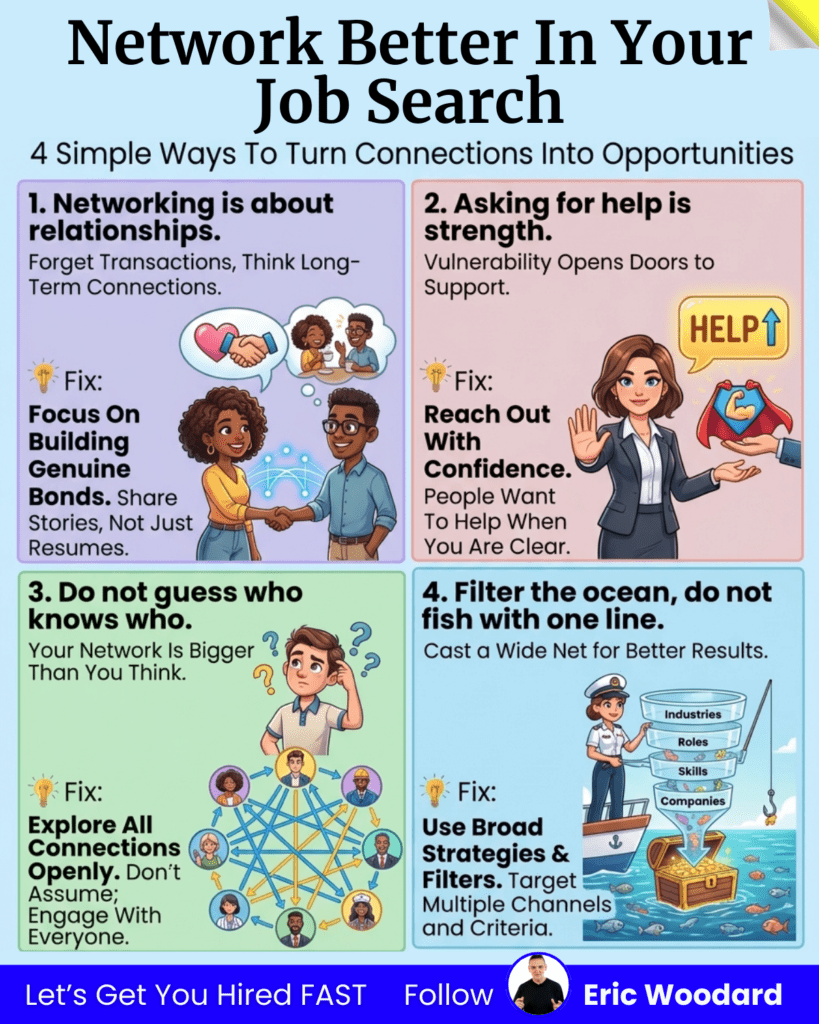
1. Why Effective Job Networking Strategies Are About Building Relationships, Not Transactions
One of the effective job networking strategies I teach is this: think of networking as building relationships, not transactional exchanges. Too many job seekers make the mistake of approaching networking like a numbers game – more people, more chances. But that often leads to meaningless interactions.
Instead, focus on building genuine bonds 🤝. Think of networking as connecting with people on a human level. Share stories about your experiences, not just your resume. Let people see who you are beyond your job title. When you focus on relationships, you’ll start to see how networking can be a fulfilling and rewarding experience.
2. Asking for Help is a Strength, Not a Weakness
One of the most powerful effective job networking strategies is recognizing that asking for help is actually a sign of strength, not weakness. People often think asking for assistance will make them appear vulnerable or incompetent. In reality, when you ask for help, you’re giving someone an opportunity to invest in you. And when people invest in you, they pay attention 👀.
Whether it’s asking for career advice, seeking an introduction, or asking for feedback, don’t be afraid to reach out with confidence. Be clear about what you want and let people know how they can help. The more specific you are, the more likely you are to get the support you need.
3. Stop Guessing Who Knows Who: Engage Widely
Another critical effective job networking strategy is understanding that your network is bigger than your assumptions. It’s easy to fall into the trap of thinking that only people you already know can help you. But your network is much wider than you think. People in your circle know other people who could be valuable connections.
So stop guessing who knows who and start engaging widely. Stay curious and explore new connections within your existing network and beyond. Don’t limit yourself to the “obvious” contacts 🌐. Engage with people in various industries, roles, and positions – you never know where a new opportunity might come from.
4. Filter the Ocean, Not One Fish
Instead of casting one tiny line and hoping it lands perfectly, use broad strategies and multiple channels. This is one of the most effective job networking strategies I’ve seen. The job market is vast, and there are endless opportunities, but you need to expand your reach to find them.
Think of it like fishing. Don’t just focus on one fish – broaden your strategy. Look at industries, roles, companies, skills, and communities. When you widen the filter, you remove luck from the game. Networking with a broad perspective means you’re not just waiting for the perfect match – you’re creating it by engaging with many different avenues.
5. Consistency is Key: Keep Using These Effective Job Networking Strategies Every Day
Another effective job networking strategy is consistency. It’s not enough to network once and hope something happens. Networking is an ongoing process. Consistency is key.
Make it a daily habit to reach out to someone new, attend industry events, or engage on social media. Stay top-of-mind with your network by sharing useful content, offering support, or just checking in with people. The more consistent you are, the more likely your network will remember you when opportunities arise.
Additional Tips to Strengthen Your Job Networking
Build a Strong LinkedIn Profile: Make sure your LinkedIn profile is up-to-date and reflects your professional brand. Highlight your skills, achievements, and goals. Engage with your network by liking and commenting on posts. This keeps you visible and engaged.
Attend Networking Events: Both virtual and in-person networking events provide great opportunities to meet new people in your industry. Look for conferences, webinars, and meetups to expand your network.
Follow Up After Every Connection: Always follow up after a networking interaction. A simple thank you message or a request for a follow-up conversation can go a long way in solidifying the connection.
Offer Value: When you network, think about how you can offer value to others. Whether it’s sharing helpful resources, making introductions, or offering advice, helping others creates goodwill and strengthens your relationships.
Get Out of Your Comfort Zone: Networking can sometimes feel uncomfortable, but it’s important to push past that discomfort. Take risks and be open to new connections, even if they feel outside of your usual circle.
Frequently Asked Questions About Job Networking
1. How can I network effectively if I’m an introvert?
Networking can be challenging for introverts, but it’s not impossible. Focus on one-on-one interactions rather than large groups. Start by reaching out to people you feel comfortable with and build from there. It’s about quality, not quantity.
2. How do I start networking when I don’t know anyone in my field?
Begin by joining industry groups on LinkedIn or Facebook. Attend webinars and conferences. Follow thought leaders and engage with their posts. Slowly build relationships online before moving to in-person interactions.
3. Should I reach out to hiring managers directly during my job search?
It’s okay to reach out to hiring managers directly, but don’t be too pushy. Start by expressing interest in their company or role and ask for advice. Keep it friendly and professional, not transactional.
4. What’s the best way to follow up after a networking event?
Send a personalized message thanking them for their time and mentioning something specific from your conversation. Express interest in staying connected and suggest a follow-up conversation in the future.
5. How can I build a meaningful relationship with my network?
Focus on mutual value. Ask people about their work and show genuine interest in what they do. Share resources, connect them with others, and stay in touch regularly. Building meaningful relationships takes time, but it pays off in the long run.
By applying these effective job networking strategies, you can transform your approach to networking and get faster results in your job search. Networking is about building genuine relationships, being proactive, and staying consistent. When you start seeing networking as a two-way street, you’ll find that job searching doesn’t feel like such a daunting task anymore.